INSTITUTE OF LANGUAGE STUDIES AND APPLIED SOCIAL SCIENCES
(ILSASS)
THE CHARUTAR VIDYA MANDAL (CVM) UNIVERSITY
AGEIS: CHARUTAR VIDYA MANDAL, VALLABH VIDYANAGAR
B.A. (English Language and Literature) (NEP)
B.A. (English Language and Literature) (NEP)
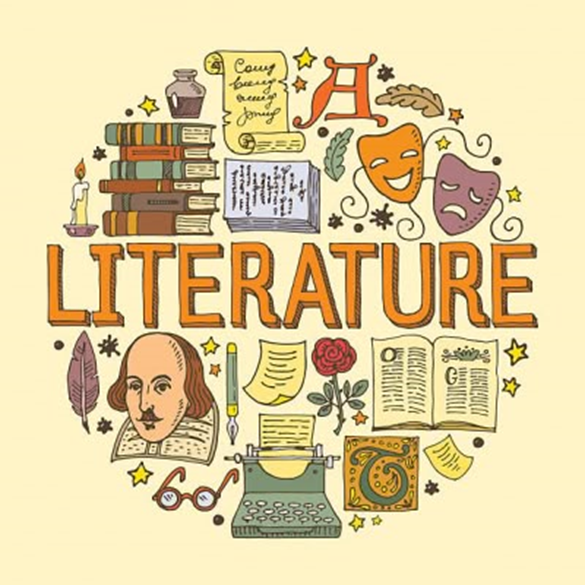
The Bachelor of Arts in English Language and Literature under the National Education Policy (NEP) of ILSASS offers a comprehensive and interdisciplinary approach to the study of English. This program is designed to develop students’ proficiency in the English language while deepening their understanding of literature across genres, periods, and cultures.
The NEP-based syllabus focuses on building strong foundational knowledge in literary history, critical theory, and language studies, while also encouraging the development of practical skills such as creative writing, translation and communication. It promotes flexibility and choice through a credit-based system, allowing students to explore various elective subjects alongside their core studies.
With an emphasis on multilingualism, holistic education, and skill development, the B.A. (ELL) program of ILSASS prepares students for diverse career paths in teaching, writing, publishing, translation, content creation, and research, while fostering critical thinking and cultural awareness.
The course curriculum structured across 8 semesters offers most literature and language specific and challenging like: -
| Course Group | Credits | Course Title |
| Major | 4 | Introduction to English Prose |
| 4 | Beginning of English Literature (450 - 1500) | |
| Minor (Any One) | 4 | Introduction to Psychology |
| Principles of Mass Communication and Journalism | ||
| Introduction to Political Concepts | ||
| Principles of Micro Economics | ||
| Multidisciplinary | 4 | Indian Constitution in Practice |
| Ability Enhancement Course | 2 | Language Skills |
| Skill Enhancement Course | 2 | Basic Computer Skills |
| Indian Knowledge System | 2 | Indian Ethos and Value System |
| Course Group | Credits | Course Title |
| Major | 4 | Analysis and Interpretation of Literary Genres |
| 4 | History of English Literature (1501 - 1700) | |
| Minor (Any One) | 4 | Intermediate Macro Economics |
| Fields of Psychology | ||
| Theories and Models of Mass Communication | ||
| Government and Governance | ||
| Multidisciplinary | 4 | Climate Change and Sustainable Development |
| Ability Enhancement Course | 2 | Communication Skills |
| Skill Enhancement Course | 2 | Advanced Computer Applications - MS Excel |
| Value Addition Course (Any One) | 2 | A Course on Liberal Arts - Painting |
| A Course on Liberal Arts - Photography | ||
| A Course on Liberal Arts - Media and Graphics | ||
| A Course on Liberal Arts - Music | ||
| A Course on Liberal Arts - Dramatics | ||
| A Course on Liberal Arts - Contemporary Dance |
| Course Group | Credits | Course Title |
| Major | 4 | History of English Literature (1701 - 1900) |
| 4 | Reading and Understanding Drama | |
| 4 | Reading and Understanding Poetry | |
| Multidisciplinary | 4 | Digital Marketing |
| Ability Enhancement Course | 2 | Business Communication |
| Skill Enhancement Course | 2 | Creativity, Problem Solving and Innovation |
| Indian Knowledge System | 2 | Indian Culture and Heritage |
| Course Group | Credits | Course Title |
| Major | 4 | Reading and Understanding Fiction |
| 4 | History of English Literature (1901 to Present) | |
| 4 | Postmodern Literature | |
| Minor (Any One) | 4 | Applied Social Psychology |
| Principles of Marketing | ||
| Introduction to Peace and Conflict Management | ||
| Indian Economy : Structure and Issues | ||
| Ability Enhancement Course | 2 | Corporate Communication |
| Skill Enhancement Course | 2 | Statistics |
| Value Addition Course (Any One) | 2 | National Service Scheme |
| Physical Education and Sports |
| Course Group | Credits | Course Title |
| Major | 4 | Myth, Folklore, and Narrative Forms |
| 4 | Classical Foundations of Literary Studies | |
| 4 | World Classics | |
| Minor (Any One) | 4 | Industrial Psychology |
| Understanding Cinema | ||
| Indian Financial System | ||
| Introduction to Public Administration | ||
| Discipline Specific Minor | 4 | Indian Writing in English |
| Skill Enhancement Course | 2 | Basic Research Techniques |
| Course Group | Credits | Course Title |
| Major | 4 | Language, Power, and Discourse |
| 4 | Schools of Literary Criticism: From Formalism to Poststructuralism | |
| 4 | Postcolonial Literature | |
| Discipline Specific Minor | 4 | Introduction to English Language Teaching |
| Ability Enhancement Course (Any One) | 2 | Personality Development and Soft Skills |
| Internship | 4 | Internship |
| Course Group | Credits | Course Title |
| Major | 4 | Contours of English Literary History: From Chaucer to the Contemporary |
| 4 | Traditions in Literary Criticism: Classical to Contemporary | |
| 4 | European Literature | |
| Discipline-specific Minor | 4 | English Language Teaching and Literature |
| Research Project in Major Specific | 6 | Research Project in ELL – Foundation Phase |
| OR | ||
| On-the-Job Training | 6 | Industrial Training for ELL – Foundation Phase |
| OR | ||
| Major | 4 | Translation: Theory and Practice |
| Skills Enhancement | 2 | Critical Thinking and Problem Solving Skills |
| Course Group | Credits | Course Title |
| Major | 4 | Contours of English Literary History: From Chaucer to the Contemporary |
| 4 | Traditions in Literary Criticism: Classical to Contemporary | |
| 4 | European Literature | |
| Discipline-specific Minor | 4 | English Language Teaching and Literature |
| Research Project in Major Specific | 6 | Research Project in ELL – Foundation Phase |
| OR | ||
| On-the-Job Training | 6 | Industrial Training for ELL – Foundation Phase |
| OR | ||
| Major | 4 | Translation: Theory and Practice |
| Skills Enhancement | 2 | Critical Thinking and Problem Solving Skills |
| Course Group | Credits | Course Title |
| Course Work | 4 | Advanced Research Methodology |
| 4 | Academic Writing | |
| 2 | Application of Literary Theories to Research | |
| Research Project in Major Discipline | 12 | Research Dissertation |
| OR | ||
| On-the-Job Training | 12 | Fieldwork Practicum |
| Course Group | Credits | Course Title |
| Major | 4 | Marginal Voices in Literature |
| 4 | Women's Writing | |
| 4 | Comparative Literature | |
| Discipline-specific Minor | 4 | Graphic Narrative |
| Major | 4 | Canadian Literature in English |
| Skills Enhancement | 2 | Cyber Literacy |
B.A. (ELL) (NEP) : Career Scope
After completing B.A. (ELL) programme, an individual can pursue vast job opportunities in the market due to the extensive demand for English professionals today. A candidate with good English skills is required in almost every industry. Here are some job opportunities after completing B.A. in English Language and Literature from ILSASS:
• Teacher
• Content Writer
• Journalist
• Script Writer
• Proofreader
• Editor
• Copywriter
• Creative writer etc…
Apply Now: CVMU | Student Portal
Programme Educational Objectives (PEOs)
PEO 1: To provide historical and literary knowledge
Equip students with a comprehensive understanding of the development of English literature from its origins to the present, aligning with UGC curriculum standards, to appreciate the relationship between literature and historical contexts.
PEO 2: To foster literary appreciation and critical analysis
Develop students’ capacity to engage with and critically evaluate prose, poetry, drama, and fiction, with exposure to canonical and contemporary works across cultures.
PEO 3: To nurture analytical, creative, and interpretative skills
Train students in the interpretation of literary genres and texts using theoretical tools, enabling them to analyse themes, styles, and techniques while cultivating independent and imaginative thought.
PEO 4: To enhance communication and linguistic competence
Promote fluency in English language usage and literary expression through the study of linguistics, communication skills, and language-based courses, supplemented by internships and fieldwork.
PEO 5: To cultivate socially and culturally responsible individuals
Encourage students to reflect on global and national socio-cultural issues through literature, and inspire them to participate meaningfully in cultural, ethical, and intellectual discourses.
Programme Specific Outcomes (PSOs)
Updated:
PSO 1:
Understand and interpret literary texts across major genres—prose, poetry, drama, and fiction—by demonstrating awareness of literary forms, conventions, and narrative strategies.
PSO 2:
Apply knowledge of English language structure, grammar, phonetics, and linguistics to enhance oral and written communication while understanding linguistic theories and their practical applications.
PSO 3:
Employ literary theories and critical perspectives—from classical to postmodern—to analyze texts, construct logical arguments, and engage in informed literary criticism.
PSO 4:
Demonstrate cultural sensitivity, ethical awareness, and interdisciplinary understanding by relating literature to fields such as psychology, politics, philosophy, and environmental studies.
Old:
PSO 1: Understand the chronological development of English literature, tracing its transformation from early periods to the contemporary era, while recognizing the interplay between literary works and their historical, political, and cultural contexts.
PSO 2: Demonstrate familiarity with a wide range of literary genres—including poetry, drama, fiction, and prose—by identifying their structural features, thematic concerns, and stylistic variations.
PSO 3: Critically engage with texts through close reading and interpretation, employing appropriate literary theories and frameworks to deepen analytical insights and evaluate meaning.
PSO 4: Appreciate the richness of poetic language and expression by exploring various lyrical forms and poetic devices, enhancing sensitivity to rhythm, imagery, and metaphor.
PSO 5: Analyze dramatic literature in its written and performed forms, gaining insight into theatrical traditions, dramatic techniques, and the sociopolitical implications of stage narratives.
PSO 6: Examine literary works from diverse cultures and regions, encouraging cross-cultural awareness and comparative analysis to foster a global perspective on literature.
PSO 7: Develop an understanding of linguistic principles and language use, recognizing the evolving nature of English and its application in different social and cultural settings.
PSO 8: Apply research methodologies to independently explore literary topics, construct coherent arguments, and produce scholarly writing supported by appropriate academic resources.
PSO 9: Cultivate original thinking through creative and reflective writing, enhancing the ability to articulate ideas effectively in both academic and imaginative contexts.
PSO 10: Communicate ideas with clarity and confidence across various platforms, demonstrating ethical awareness, cultural sensitivity, and readiness for careers in teaching, writing, publishing, and media.